
How Can Clinics Source Injectables Without Overpaying?

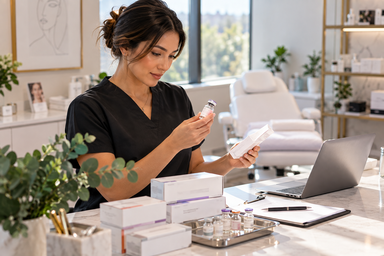
Ask any practice manager what keeps them up at night and sourcing clinic injectables is almost always on the list. Prices shift from supplier to supplier, minimum order requirements tie up cash flow, and a single stockout can mean turning away a patient who booked weeks in advance. For independent med spas, dermatology practices, and wellness clinics, the way a business handles injectable sourcing often determines whether it thrives or just survives.
This article looks at why injectable sourcing has become such a pain point for clinics in 2026, what a smarter sourcing model actually looks like, and how a group purchasing approach is changing the equation for independent practices across the country.
Why Has Injectable Sourcing Gotten More Complicated?
A few years ago, most clinics dealt with a handful of suppliers for a narrow set of products. Today, the category has expanded dramatically. Neuromodulators, dermal fillers, biostimulators, and injectable weight loss products all come from different manufacturers and distributors, each with its own pricing structure, minimum order quantities, and delivery timelines.
For a solo practice or a small group of clinics, managing that many supplier relationships eats into time that should be spent on patient care. It also puts independent clinics at a disadvantage compared to larger groups that can negotiate volume discounts simply because of their size.
What Makes Sourcing Injectables Difficult for Independent Clinics?
Inconsistent Pricing Across Suppliers
Two clinics buying the exact same product can end up paying meaningfully different prices depending on their order volume, their negotiating history, and even how long they have worked with a given supplier. Without a way to compare pricing across the market, clinics are often left guessing whether they are getting a fair deal.
Minimum Order Requirements That Tie Up Cash
Many suppliers require a certain order size before offering better pricing tiers, which forces smaller clinics to either overbuy and sit on excess inventory or accept higher per-unit costs. Neither option is ideal for a practice trying to manage cash flow carefully.
Supply Reliability
Nothing damages patient trust faster than rescheduling an appointment because a product was out of stock. Reliable sourcing means having a supplier relationship that can be trusted to deliver consistently, not just occasionally when demand is low.
How Does a Group Purchasing Model Solve These Problems?
A group purchasing organization pools the buying volume of many independent clinics so that member practices can access pricing tiers and supplier terms that would normally require a much larger order size. Instead of a single clinic trying to negotiate on its own, the collective demand of hundreds of practices gives everyone more leverage.
RPN builds this kind of network around clinic injectables, including injectable weight loss products and aesthetic injectables, connecting member clinics with vetted pharmaceutical suppliers through a streamlined, plug-and-play system. Clinics do not need to abandon suppliers they already trust. Instead, the network fills in the gaps where better pricing or more reliable sourcing is available.
How Should a Clinic Serving High-End Clients Think About Injectable Sourcing?
Clinics that cater to a luxury or high-end clientele carry an extra layer of pressure around sourcing. These patients tend to expect access to the newest treatments as soon as they become available, along with a consistent, white-glove experience every visit. That means a stockout is not just an inconvenience. It can feel, to a discerning patient, like the practice is not operating at the level they expect.
For these clinics, the priority is less about chasing the absolute lowest price and more about protecting product quality, consistency, and availability while still improving margins where possible. A group purchasing network gives a boutique or high-end practice access to the same vetted suppliers as larger competitors, so the clinic can maintain its premium positioning without quietly absorbing higher costs than it needs to.
What Should Clinics Look for in an Injectable Sourcing Partner?
Vetted Supplier Relationships
Price is only part of the equation. A sourcing partner should already have done the work of vetting pharmaceutical suppliers and manufacturers, so a clinic is not left evaluating unfamiliar vendors on its own.
No Disruption to Existing Operations
The best sourcing solutions integrate into a clinic's current ordering process rather than requiring staff to learn a completely new system. A plug-and-play approach means a practice can start seeing savings without retraining its team.
Transparent Cost Analysis
Before switching or adding any sourcing relationship, a clinic should be able to see a clear breakdown of current spending versus potential savings. This kind of transparency makes the decision easier and removes the guesswork that usually comes with vendor changes.
Making Injectable Sourcing Work for Your Practice
Sourcing clinic injectables does not have to be a constant balancing act between price, reliability, and quality. Independent practices that join a purpose-built buying network gain the kind of leverage that used to be reserved for large multi-location groups, without giving up control over their day-to-day operations.
If rising injectable costs have been quietly cutting into your margins, it is worth taking a closer look at how a group purchasing model could change that. You can explore RPN's approach to sourcing and distribution on their aesthetics solutions page or start with a visit to the RPN homepage.
Frequently Asked Questions
What counts as a clinic injectable? Clinic injectables typically include neuromodulators, dermal fillers, biostimulators, and injectable weight loss products used in aesthetic, dermatology, and wellness practices.
Why do injectable prices vary so much between suppliers? Pricing often depends on order volume, the length of a clinic's relationship with a supplier, and whether the practice has access to group purchasing leverage. Independent clinics without that leverage often pay more per unit than larger groups.
Can a clinic use group purchasing without switching all of its suppliers? Yes. A well-designed group purchasing network is built to work alongside a clinic's existing supplier relationships rather than replace all of them at once.
How can a clinic tell if it is overpaying for injectables? A cost analysis comparing current spending against group purchasing pricing is the most straightforward way to identify where a practice might be leaving savings on the table.
Does group purchasing work for smaller, independent clinics? It often benefits smaller clinics the most, since they typically lack the order volume to negotiate favorable pricing on their own. Pooling demand with other practices closes that gap.
This article was updated in September 2026 to reflect current sourcing trends for clinic injectables across the United States.
Ready to Take the Guesswork Out of Ordering?
A clearer sourcing strategy starts with knowing exactly where your clinic stands. Request a free cost analysis from RPN and see what a nationwide buying network could mean for your injectable budget.